Flores de Fogo - Pleistocene of Indonesia
A full-moon night on Flores Island, Indonesia, during the Pleistocene. With natural selection occurring in a limited and isolated habitat (in this case, the classic example of an island), it is common for different factors to lead large animals to become progressively smaller over generations, and small animals to become gigantic. Flores presents fascinating examples of these phenomena, known as insular dwarfism and insular gigantism, respectively.
Around 50,000 years ago, before the arrival of modern humans, the island was home to the “Flores man” (Homo floresiensis), a hominin about 1.1 m tall - an example of insular dwarfism. A group gathers to prepare a giant rat, Papagomys armandvillei (45 cm long, excluding the tail). Although early interpretations suggested H. floresiensis mastered fire, later dating showed most burned remains were left by modern humans, and very few of their tools had contact with fire. The story behind the scene sought to maintain the concept of these hominins having an experience with flames, even if they did not know how to produce them: it is narrated that, on this occasion, the group kept alive a small fire caused by a lightning strike on a tree that day, having learned that this fascinating burning light is good for keeping warm, warding off dangers at night, and -why not - cooking meat. Feeding the fire for a few hours with branches and twigs that were promptly gathered to take advantage of the rare opportunity, they later bring the flame to this place where they plan to spend the night, finally building a larger fire.
They choose an open area surrounded by small trees. Underfoot are sticky carnivorous plants, Drosera burmanii, and they also gather basil (Ocimum basilicum), crushing it into a paste as seasoning. As night falls, a giant 3 m long, venomous lizard attacks: a Komodo dragon, looking even larger than it is due the small size of the Flores men near it. . Two individuals repel it with stones and a burning branch.
In the center of the background is a herd of dwarf proboscideans( 1.3 m tall), Stegodon florensis insularis. Nearby, two 1.8 m tall storks, Leptoptilos robustus, sinisterly observe the hominins, perhaps intending to steal their prey. These, along with H. floresiensis, are extinct while the other species depicted survive today.
Owls of the genus Otus perch behind the fire: Otus alfredi looks for prey with the aid of the firelight, while Otus magicus observes from afar. Flores crows, Corvus florensis, gather in a dry tree, watching the hominins and the Komodo dragon conflict. On the top right side, a Heleia dohertyi pair rest in a nest with their chicks; below, Megapodius reinwardt guard their large mound nest from a Malayopython reticulatus the 7 m long reticulated python.
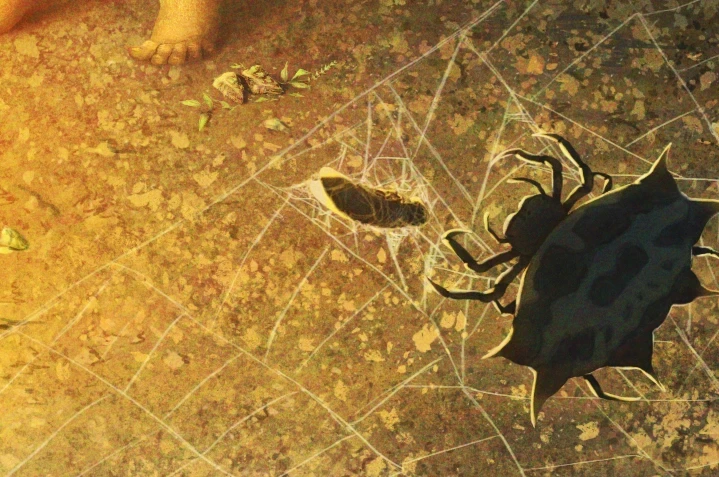
In the foreground, a tree houses two tokai geckos (Gekko gecko) that fight for territory and a resting moth Attacus inopinatus. A spider Gasteracantha taeniata appear nearby, with a fly caught in its web. The flora also includes the orchids Arundina graminifolia, Phaius tankervilleae, and Bulbophyllum lobbii.
This artwork concludes João Macêdo’s Tales of the Phanerozoic, ending the 12-chapter series portraying life across Earth’s history. Check out the Pleistocene chapter: https://sites.google.com/view/talesfromthephanerozoic/the-cenozoic/island-of-dwarfs-and-giants